


How Kenya’s Indian and Sikh communities shaped the country’s hockey heritage




.jpg)




Reading Time: 7min | Thu. 01.01.26. | 18:44
Kenya’s hockey story cannot be told without acknowledging the Kenyan-Indian, and especially Sikh, contribution
When Kenya first stepped onto the Olympic stage in men’s hockey in 1956, it was not just a national debut.
It was the culmination of decades of quiet groundwork laid on dusty pitches, in community clubs, and within tightly knit Kenyan-Indian families, particularly the Sikh community, whose influence would come to define the country’s golden era in the sport.
Follow our WhatsApp channel for more news
Hockey was Kenya’s first team sport at the Olympic Games.
For a time, it was also its most globally respected.
Behind that rise stood a generation of players, administrators, and visionaries whose roots traced back to the Indian subcontinent, but whose sporting legacy became inseparably Kenyan.
This is the story of Kenyan hockey from its colonial introduction and Olympic highs to its modern struggles told through the prism of the communities that helped build it.
How Hockey gained root in Kenya
Field hockey arrived in Kenya in the early 20th century during British colonial rule.
While the British introduced the sport administratively, it was the Indian diaspora-especially Sikhs and Goans- who embraced it culturally and competitively.
For Sikh communities settling in Nairobi, Mombasa, Kisumu, and Nakuru, hockey quickly became more than recreation.
It was a point of identity, discipline, and communal pride. Informal matches evolved into structured competition, and by the 1920s and 1930s, organised clubs were taking shape.
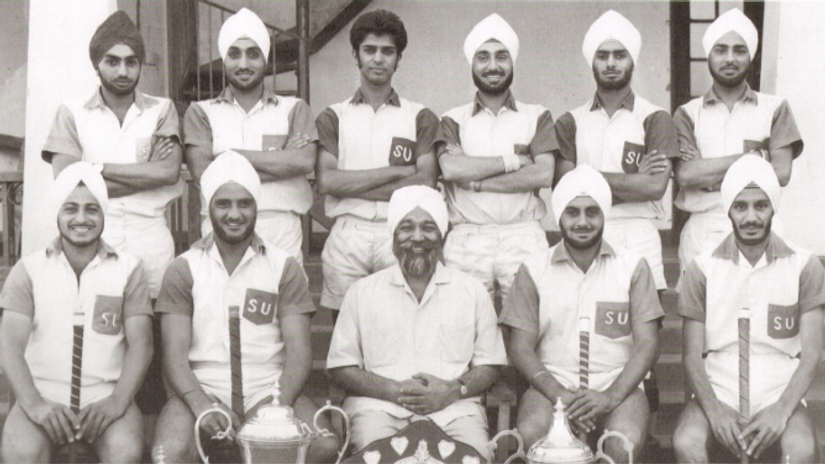
Among the most influential was Sikh Union Club, founded in Nairobi in 1923.
Initially known as Khalsa Union, the club became the heartbeat of Kenyan hockey.
It provided facilities, coaching, competitive structure, and most crucially, continuity.

Over time, sister clubs emerged in Kisumu, Mombasa, Eldoret, and Nakuru, creating a nationwide network that fed the domestic game.
Long before academies and high-performance programs became fashionable, these clubs were developing talent through mentorship, repetition, and fierce internal competition.
From local dominance to international ambition
By the 1950s, Kenyan hockey had matured enough to challenge beyond East Africa.
The national team, largely drawn from Sikh Union- and other Kenyan-Indian dominated clubs- made its Olympic debut at the 1956 Melbourne Games.

That appearance marked the beginning of Kenya’s rise as Africa’s hockey powerhouse.
Kenya went on to compete at the 1960 Rome Olympics, 1964 Tokyo Olympics, 1968 Mexico City Olympics, and 1972 Munich Olympics, an extraordinary run for a nation outside the traditional hockey superpowers.
At the centre of this era was Avtar Singh Sohal, arguably the greatest figure in Kenyan hockey history.
Sohal represented Kenya at four Olympic Games, captained the national team three times, and later coached the side.
His longevity, leadership, and tactical intelligence made him the face of Kenyan hockey during its most successful period.
But he was not alone.
Players such as Santokh Singh Matharu, Surjit Singh Rihal, Amarjeet Singh Marwa, Manjeet and Jitender Singh Panesar, among others, formed the backbone of teams that regularly challenged India, Pakistan, Great Britain, and Australia - nations with far deeper hockey traditions.
Kenya was no longer just participating. It was competing.
The 1971 World Cup: Kenya’s defining moment
Kenya’s crowning achievement came at the 1971 Hockey World Cup in Barcelona.
Against expectations, the national team powered its way to a historic fourth-place finish, narrowly missing out on a medal after losing to India in the bronze medal match.

It remains Kenya’s best-ever performance at a Hockey World Cup.
That squad reflected the depth of the Kenyan-Indian contribution - disciplined defenders, technically gifted midfielders, and tactically astute leadership, shaped through years of competitive club hockey.
For a brief moment, Kenya stood shoulder to shoulder with the world’s best, and African hockey had a global standard-bearer.
Beyond pitch: Leadership and administration
The Sikh contribution to Kenyan hockey was never limited to playing roles.
Administrators such as Mahan Singh, who served as President of the Kenya Hockey Union in the 1950s, helped formalize the sport’s structures.

Facilities, competitions, and governance systems were strengthened during this period.
Perhaps the most influential figure off the pitch was Hardial Singh Kular.
A former international player, Kular went on to chair the Kenya Hockey Union, led the African Hockey Federation, and served as a Vice-President of the International Hockey Federation (FIH).
His work placed Kenya and Africa on the global hockey map.
Kular’s influence extended beyond titles. He advocated for African representation, officiating development, and continental competition at a time when such platforms were limited.
His contribution was later recognized with the Olympic Order, one of sport’s highest honors.
Community, identity, and Hockey Club culture
Hockey clubs like Sikh Union were more than sporting institutions. They were social centres - places where culture, discipline, and values were passed down generations.
Young players learned not only how to trap a ball or execute a press, but how to carry themselves, respect the game, and represent something bigger than themselves.
Training sessions were rigorous. Selection was unforgiving. Reputation had to be earned weekly.
This environment produced mentally tough players capable of competing internationally despite limited resources.
The clubs also acted as custodians of memory, preserving stories, trophies, and photographs that now form the informal archive of Kenyan hockey history.
Independence, migration, and source of decline
Kenya’s independence in 1963 marked a turning point.
Economic uncertainty and political changes led to significant emigration within the Kenyan-Indian community, particularly during the late 1960s and 1970s.
Many former players and administrators relocated to the United Kingdom, Canada, and Australia.
The impact on hockey was immediate. Talent depth thinned. Administrative continuity weakened. Investment slowed.

While Kenya continued to compete internationally including appearances at the 1973 World Cup, the dominance of earlier decades gradually faded.
By the 1980s and 1990s, Kenya was no longer a consistent global force, even as other African nations began to rise.
Today, Kenyan hockey exists in a vastly different landscape, the Kenyan-Indian presence is no longer as numerically dominant, but its legacy remains embedded in the sport’s DNA.
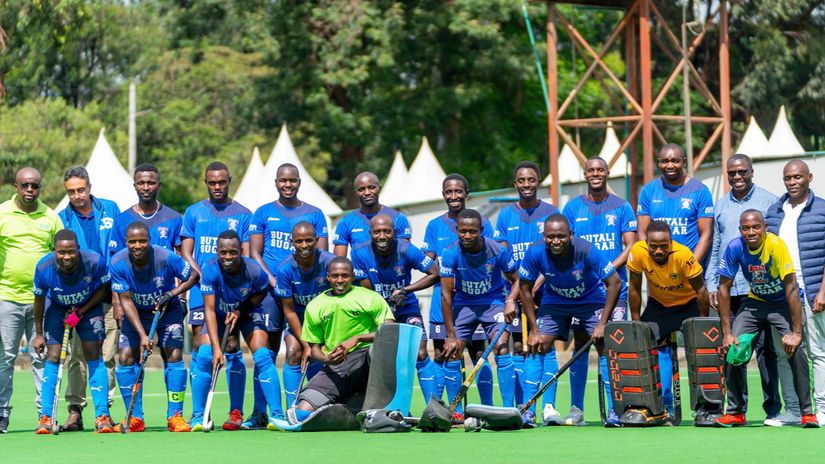
Clubs such as Sikh Union Nairobi and Sikh Union Kisumu- now Butali Warriors- continue to compete, preserving a connection to the past while adapting to modern realities.
Perhaps the greatest lesson from the Kenyan-Indian and Sikh influence is the importance of community-driven sport where clubs invest long-term, leadership is organic, and identity fuels excellence.
Why this history matters
Kenya’s hockey story cannot be told without acknowledging the Kenyan-Indian, and especially Sikh, contribution.
Their impact shaped the nation’s golden era, influenced global perceptions of African hockey, and left a blueprint for sustainable development.
As Kenya seeks to rebuild its hockey fortunes in the modern era, revisiting this history is not nostalgia. It is instruction.
Because before Kenya dreamed of medals, it learned how to belong — to a team, to a community, and to the world — through hockey.
And that lesson still matters and today, nearly a century after it helped lay the foundations of Kenyan hockey, Sikh Union Nairobi is deliberately reshaping its own history.
After years of decline and infrastructural decay, the club has embarked on a significant revival project, anchored by the replacement of its old, dilapidated astro turf with a new modern playing surface.
For generations, that pitch was a breeding ground for Olympians and World Cup players; its deterioration mirrored the club’s gradual slide from the summit of Kenyan hockey.
The new astro turf signals more than infrastructure renewal. It represents intent.
Alongside the facility upgrade, Sikh Union Nairobi has begun strengthening its playing unit, rebuilding competitiveness in the domestic leagues and re-establishing pathways for talent development.
The objective is not merely to participate, but to restore relevance, pride, and performance values that once defined the club and, by extension, Kenyan hockey itself.
In many ways, Sikh Union’s resurgence mirrors the broader conversation around Kenyan hockey: the need to reconnect with proven models of community-driven development, strong governance, and long-term investment.
.jpg)
As Kenya looks to reclaim its place on the continental and global stage, the revival at Sikh Union Nairobi serves as a reminder that the sport’s future may still be rooted in the same institutions that once carried it to the world.
History, it seems, is not only being remembered - it is being rebuilt.